Right-Sizing Your VPS Strategy in 2026: Reliability, Cost, and Control


✨ Highlights at a Glance
- 🤖 AI‑ready SAP architecture that scales safely
- 📊 Real‑time analytics connected to business workflows
- 🔐 Governance built‑in for compliance and auditability
For many organizations, the question isn’t “VPS or Kubernetes or serverless?”—it’s “Where does VPS fit so we get reliability and cost efficiency without unnecessary complexity?” This post lays out when a VPS is the right tool, how to size it, and a 90‑day action plan.
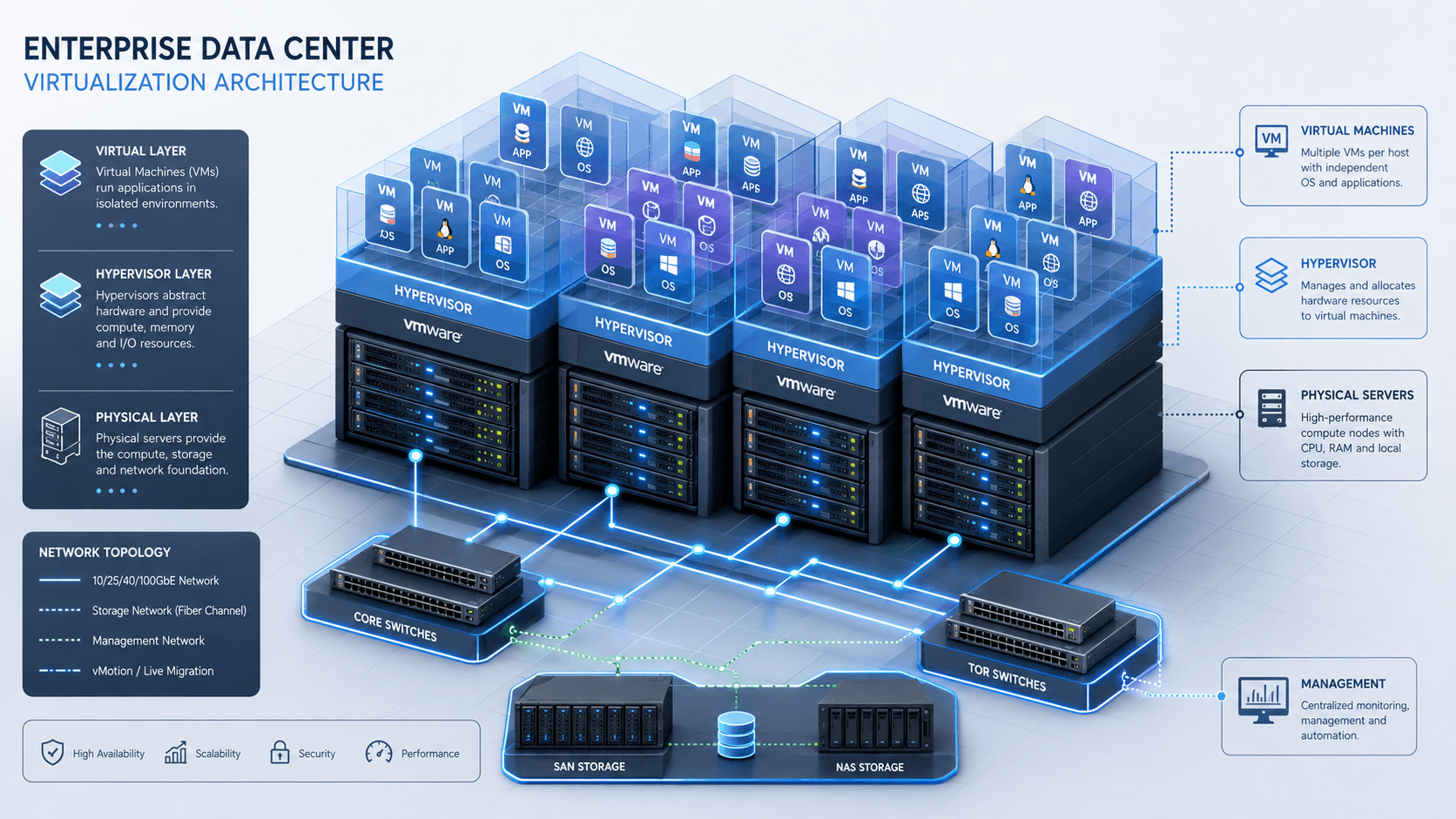
[Bare Metal] -(VT-x/AMD-V)-> [Hypervisor] |-- VPS A (vCPU, RAM, NVMe) |-- VPS B (vCPU, RAM, Block Storage) |-- VPS C (vCPU, RAM, GPU/vGPU*)
Why VPS Still Matters in 2026 🔧
- Predictable isolation over shared PaaS noise; performance is easier to forecast and budget.
- Straightforward compliance posture: fixed OS baseline, controlled patch windows, stable IPs.
- Network control: full iptables/nftables, custom routing, BGP on premium tiers.
- Cost transparency: steady monthly costs beat surprise egress/req-based charges in many steady‑state apps.
- Edge and latency workloads benefit from proximity and simpler stacks.
Designing a Fit-for-Purpose VPS Footprint 🧭
Focus on a few levers that materially affect SLOs and cost:
- Compute
- Dedicated vs shared cores: choose dedicated for latency-sensitive APIs; shared for bursty dev/test.
- NUMA awareness on larger plans (≥8 vCPU) to avoid cross-node penalties.
- Storage
- Local NVMe for write-heavy or DB temp spaces; networked block storage for snapshots and durability.
- Separate data and logs; enable discard/trim where supported.
- Networking
- IPv6 first, IPv4 where required; reserve static ranges for allowlists.
- Consider premium NICs or SR-IOV tiers if packet rates are high.
- Security
- CIS-hardened images, minimal packages, MFA to console, encrypted volumes.
- Kernel live patching where available; baseline EDR and FIM agents.
- Observability
- Install node exporter/collectd, ship logs via syslog/Fluent Bit, set SLOs per tier.
Recommended profiles for common workloads:
| Workload pattern | Recommended VPS profile | Notes | |---|---|---| | Low-traffic web/API | 2 vCPU / 4–8 GB RAM, shared core, NVMe | Autoscale horizontally before going vertical. | | Small SQL/OLTP | 4–8 vCPU dedicated, 16–32 GB RAM, local NVMe + replicated block storage | Pin DB to dedicated cores; test fsync latencies. | | CI runners | 4 vCPU / 8–16 GB RAM, ephemeral block storage | Use spot/preemptible variants if supported. | | Edge telemetry/ingest | 2–4 vCPU, 8 GB RAM, premium NIC, IPv6 | Prioritize NIC performance and regional proximity. |
90-Day Implementation Plan ✅
Days 0–30: Baseline and Design
- Inventory current VPS fleet and monthly costs; tag by owner, environment, and criticality.
- Define SLOs (availability, p95 latency, and backup RPO/RTO) per workload tier.
- Choose 2–3 standardized images (hardened) and 3 instance sizes covering 80% of needs.
Days 31–60: Pilot and Guardrails
- Migrate 2 representative services to the new profiles; enable immutable images and cloud-init.
- Implement access: SSH disabled by default, SSM/agent-based access with MFA.
- Set budgets/alerts; publish a per‑tier cost and performance benchmark.
Days 61–90: Scale and Optimize
- Migrate the next 30–40% of workloads; retire undersized/oversized instances.
- Enable scheduled reboots/patch windows; verify backup restores (quarterly drills).
- Review network posture: consolidate IP ranges, roll out IPv6 where feasible, limit east‑west traffic.
Practical tips 📌
- Keep images minimal; add software at boot via cloud-init to reduce drift.
- Prefer horizontal scaling; add a canary VPS to test host maintenance events.
- Track p95 disk latency and CPU steal time—early indicators of noisy neighbors or host contention.